







2026.09.02
Feeling Limited by LMS Customization? The Option of Open Source LMS

-
Category
Recommended Articles
-
[Moodle Manual ③] 2025 Edition | Support Staff Explain How to Set Up and Utilize Forums!
-
[Moodle Manual ②] 2025 Edition|How to Create Quizzes, Setup Procedures, and FAQ Explained by Support Staff!
-
[Moodle Manual ①] 2025 Edition|How to Set Assignments & Tips for Use Explained by Support Staff!
-
What is Vyond? Introducing the benefits of an animation video production tool that can be used for business.
-
[Animation Teaching Material Production] How to Create e-Learning Materials ②
-
How does Vyond differ from other animation production software? Comparison and recommendations
-
Can Vyond animations be used as teaching materials? Here are the benefits of using them in e-learning and training.
-
Let's create business animations with Vyond! An explanation of the reasons and benefits recommended for business, as well as challenges.
-
Vyond Go (AI Video Generation) Tips and Best Practices ① Vyond Go Setup Guidelines
-
Moodle Basic Course: What is Moodle?
-
[Moodle Basic Course] What can the e-learning management system Moodle do?
-
[Moodle Basic Course] What can be done with Moodle's default features
-
Benefits and Considerations of Moodle Cloud Services
-
Moodle is not only used by universities (widespread use)


Although LMSs have already been introduced, do you feel these challenges: “It’s stuck at just distributing materials and managing assignments,” or “We want to use it more to improve classes, but there are limits to what can be done”?
While many LMSs are offered as complete services, attention has recently been increasing toward OSS-type LMSs that can evolve according to educational needs.
This article organizes the differences from traditional LMSs and introduces new options that accelerate educational DX.
Table of Contents
1. The Reality of Having Implemented an LMS but Not “Utilizing” It
2. Structural Limitations of Traditional LMS
3. A New Option: The Concept of OSS-based LMS
4. Essential Benefits of OSS-based LMS
5. What is Moodle?
6. Educational Changes Brought by OSS-based LMS
7. The Key to Success: “Design and Collaborative Support”
8. Moodle Implementation and Utilization with Human Science
9. Frequently Asked Questions about Open Source LMS
1. The Reality of Having Implemented an LMS but Not Fully Utilizing It

The implementation of LMS has already become common in many educational institutions, and the fact of "having implemented it" itself has become a given. However, when looking at the actual operation on site, the following voices are often heard.
・There is an LMS, but it is effectively just a repository for teaching materials
・It is used for assignment submission and grade management, but further utilization does not expand
・Usage varies by individual teachers, and it is not managed organizationally
・Data is accumulated, but it is not linked to educational improvement
In other words, there is a significant gap between "being implemented" and "being effectively utilized." Originally, an LMS should not be merely a tool for operational efficiency but a foundation for improving the quality of education. However, in reality, there are many cases where the situation falls into "it is convenient, but the essence of education has not changed." This sense of discomfort is an important sign for moving on to the next step.
2. Structural Limitations of Conventional LMS

So, why does this situation occur? Behind it lies the structure of the LMSs that are currently mainstream. Many LMSs are offered as so-called SaaS-type (fully developed services). This system certainly has significant advantages.
・Low initial burden such as server setup
・Can start using in a short period
・Maintenance and operation are entrusted to the service provider
・Easy to use due to standardized functions
Due to these characteristics, smooth implementation has been achieved in many organizations. However, on the other hand, there are structural aspects that are difficult to address.
For example,
・Additions or changes to functions depend on the vendor's roadmap
・It is difficult to implement unique educational methods
・Operations need to be adjusted to fit the system
・Requests are not immediately reflected
As a result, the situation on the ground may gradually become as follows.
・ "I really want to conduct this kind of class, but it is difficult with this LMS."
・ "I end up prioritizing what can be done over what I want to do."
In other words, a "structure where education is constrained by the system" is created. This is not merely a functional issue but an important factor that affects the very speed of educational reform.
3. A New Option: The Concept of OSS-based LMS
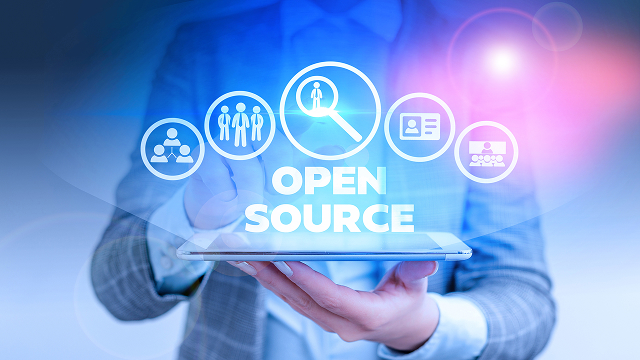
A new option gaining attention for addressing these challenges is the OSS (Open Source Software)-based LMS. As the name suggests, an OSS-based system has its source code publicly available, allowing users and developers the freedom to modify and extend it. The characteristic of an OSS-based LMS is not simply that it is "free." Its essence lies in the following three points.
・Able to freely handle even the internal structure of the system
・Can redesign functions to suit the objectives of one's own organization
・Continuously evolving by incorporating knowledge from around the world
This characteristic enables a different way of thinking from conventional LMS. From "wanting to change education" to "changing the system." In other words, it makes possible a structure where "the system follows education." This is not merely a difference in tools but an important turning point that changes the very approach to education.
For the basics of open source LMS, please see this article.
>What is an open source LMS? Introducing advantages, disadvantages, and the latest open source LMS
4. Essential Benefits of OSS-type LMS

The value of OSS-type LMS cannot be fully expressed by the single word "flexible." Let’s take a closer look at the specific changes it can bring to educational settings.
4-1. Free Customization and Extensibility
The greatest feature of OSS-type LMS is that it can be "remade" and "continuously extended."
For example,
・Customization at the source code level is possible
・Functionality can be added via plugins
・System integration through APIs is easy
This enables the following to be realized.
・Screen design optimized for unique curricula
・Different operational rules for each faculty and department
・Pilot implementation and improvement of new educational methods
With SaaS models, you had to "wait for implementation," but with OSS, you can "make it happen yourself." Instead of devising workarounds within constraints, you can remove the constraints themselves. This difference is very significant.
4-2. Flexibility of Environment (Cloud / On-Premises)
In educational institutions, security and network policies can often be major constraints when introducing systems. With OSS-type LMS,
・Operation in cloud environments
・On-premises operation on internal servers
It can support either option.
As a result,
・Environments with restricted external connections
・Organizations requiring strict information management
・Institutions with their own infrastructure
can also implement and operate it. It is possible to "adapt to the environment" rather than "adapt to the system."
4-3 High Compatibility with External Systems
As education becomes more digitalized, cases where the LMS operates independently are decreasing.
・Academic Affairs Systems
・Authentication Infrastructure (SSO)
・Learning Analytics Tools
・Content Delivery Systems
It is necessary to collaborate with many systems, such as these.
In OSS-type LMS, APIs are publicly available, so
・High flexibility in data integration
・Custom integration is possible
・Easier to accommodate future system expansions
This offers advantages such as enabling the construction of an ecosystem centered around the LMS.
4-4. Extensibility of the Learning Experience
OSS-based LMSs are valuable not just for their abundance of features, but for their ability to design the learning experience itself.
For example,
・Constant access to learning via mobile apps
・Enhanced understanding through interactive materials
・Detailed acquisition and analysis of learning history
As a result,
・Continuity of learning (prevention of dropout)
・Improved motivation to learn
・Individually optimized instruction
are realized. The LMS can evolve from a "distribution tool" to a "foundation for designing learning experiences."
4-5. A Continuously Evolving Platform
OSS-type LMSs are not developed by a single company. They are improved daily by educational institutions and developers around the world.
Therefore,
・Quick response to new educational trends
・Continuous feature updates
・Accumulation of diverse use cases
These are the characteristics it possesses. The point of implementation is not the goal, but the start of evolution.
4-6. Summary of Essential Value
Based on these points, the value of OSS-type LMS is clear. It becomes a "flexible foundation that can continuously transform education." It functions not just as a system, but as a platform for educational reform.
5. What is Moodle?

So far, we have introduced the concept and benefits of OSS-type LMS. Now, what are some representative OSS-type LMS in practice?
The leading example is Moodle.
Moodle is an open-source LMS used by educational institutions and companies worldwide, implemented across a wide range of fields including universities, vocational schools, corporations, and public organizations. It is also widely adopted by many universities and educational institutions within Japan, boasting a rich track record of implementation.
The reason Moodle is highly regarded is not simply because it is "free to use." Its major strength lies in its flexibility and extensibility, which can meet the diverse needs of educational settings.
For example, it can achieve the following.
・Customization of screens and functions to match educational policies and operations
・Function expansion with over 2,000 plugins
・Integration with academic affairs systems and authentication systems (SSO)
・Scalability to support from small classes to tens of thousands of users
・Continuous improvements and updates by communities worldwide
Additionally, Moodle comes with various built-in features that support educational activities, not just distributing materials and submitting assignments.
・Quizzes and surveys
・Discussion forums
・Workshops (peer assessment)
・Visualization of learning progress
・Learning logs and reports
By combining these features, it is possible to support not only knowledge acquisition but also various educational methods such as collaborative learning, active learning, and project-based learning (PBL).
Furthermore, as an open-source platform, Moodle is not a product dependent on a single company. It is continuously improved by educational institutions and developers worldwide, evolving flexibly to meet new educational needs.
Therefore, Moodle is chosen by many educational institutions not merely as a "learning management system" but as a platform that can grow in response to changes in education.
6. Educational Changes Brought by OSS-based LMS
When selecting an LMS, comparisons are often made from the perspective of "what features are available" and "what can it do compared to others." However, the fundamentally important viewpoint is different.
・Can it respond to future educational reforms?
・Can it flexibly adapt to organizational changes?
・Can it continue to generate value over the long term?
In other words, "flexibility to evolve rather than perfected convenience" is what matters. By adopting this perspective, an LMS transforms from a mere tool into a foundation that supports an organization's competitiveness.
By introducing an OSS-type LMS, the educational field experiences the following changes.
・Advancement of project-based learning (PBL)
・Enabling teacher-led lesson design
・Establishment of education improvement through data utilization
・Promotion of knowledge sharing within the institution
As a result, the LMS evolves from a "tool for management" to an "engine for transforming education."
7. The Key to Success is "Design and Accompaniment Support"

ただし、OSS型LMSは万能ではありません。自由度が高い分、「設計が不十分だと使われない」「運用ルールが曖昧だと定着しない」という課題も生じます。そのため重要なのは、
・Educational Design
・System Design
・Operational Design
should be considered as an integrated whole. The design of how to use the system, rather than the selection of tools, determines success.
If you currently feel that:
・There are limits to your use of the LMS
・You aim to improve the quality of education
・You want to build a flexible foundation for the future
If you are considering this, OSS-type LMS is a very strong option.
8. For Moodle Implementation and Utilization, Turn to Human Science

Human Science, recognized as a Moodle Premium Certified Partner by Moodle's developers, supports the creation of educational environments for clients based on extensive implementation experience and technical expertise.
We do not simply implement Moodle; we build the optimal environment tailored to your educational policies and operations, providing consistent support through adoption and utilization after implementation.
・Moodle Implementation Support
・Educational Design Support
・System Development and Customization
・Support for Integration with Other Systems
・Operation, Maintenance, and Adoption Support
Implementing an LMS is not the end; only through continuous utilization can educational effectiveness be truly enhanced. At Human Science, we support not only system implementation but also the creation of frameworks to transform education itself from a long-term perspective.
It is perfectly fine if you are at the stage of "feeling limitations with your current LMS" or "wanting to learn more about Moodle." Please feel free to consult with us even if you are just gathering information.
>Moodle Implementation Support & Operation
>Moodle Implementation Guide for Beginners
>How Has Moodle Changed Things? Case Studies of Moodle in Universities and Companies
9. Frequently Asked Questions About Open Source LMS
- QWhat is an OSS-type LMS?
- An OSS-type LMS (Open Source LMS) is a learning management system (LMS) whose source code is publicly available, allowing it to be freely customized and extended to meet the needs of educational institutions and companies. Moodle is widely used as a representative OSS-type LMS.
- QWhat is the difference between SaaS LMS and OSS LMS?
- SaaS LMS is easy to implement in a short period and has low operational burden, but there may be limitations on adding features and customization. OSS LMS, while requiring careful design and operation at the time of implementation, is characterized by its flexibility to customize according to educational policies and operations, and its ease of integration with other systems and feature expansion.
- QIs Moodle an OSS-type LMS?
- Yes. Moodle is a representative OSS-type LMS used by educational institutions and companies worldwide. It features extensive functionality expansion through numerous plugins and high customizability, and it is implemented across a wide range of organizations including universities, corporations, and public institutions.
- QIs operating an OSS-type LMS difficult?
- Because OSS-type LMSs offer a high degree of freedom, the design and operational framework at the time of implementation are important. By organizing requirements and operational rules in advance and receiving implementation and operational support as needed, you can build an environment that is easy to use continuously.
- QAre there cases of migrating from SaaS-based LMS to OSS-based LMS?
- Yes. There are increasing numbers of educational institutions considering migration to OSS-based LMS due to challenges they face with their current LMS in terms of customization, integration with other systems, and flexible adaptation to educational policies.
- QWhat types of educational institutions are suitable for OSS-based LMS?
- It is suitable for universities and vocational schools that want to operate their own educational programs, organizations that prioritize integration with existing systems, and educational institutions that are looking ahead to future functional expansions. It is a strong option when you want to build a system flexibly according to your educational policies and operations.
About the Author