







2026.09.04
Tips for Designing to Prevent Dropout in e-Learning Materials! Practical Methods of Instructional Design (ID)

-
Category
Recommended Articles
-
What is Vyond? Introducing the benefits of an animation video production tool that can be used for business.
-
[Animation Teaching Material Production] How to Create e-Learning Materials ②
-
How does Vyond differ from other animation production software? Comparison and recommendations
-
Can Vyond animations be used as teaching materials? Here are the benefits of using them in e-learning and training.
-
Let's create business animations with Vyond! An explanation of the reasons and benefits recommended for business, as well as challenges.
-
Vyond Go (AI Video Generation) Tips and Best Practices ① Vyond Go Setup Guidelines
-
Moodle Basic Course: What is Moodle?
-
[Moodle Basic Course] What can the e-learning management system Moodle do?
-
[Moodle Basic Course] What can be done with Moodle's default features
-
Benefits and Considerations of Moodle Cloud Services
-
Moodle is not only used by universities (widespread use)


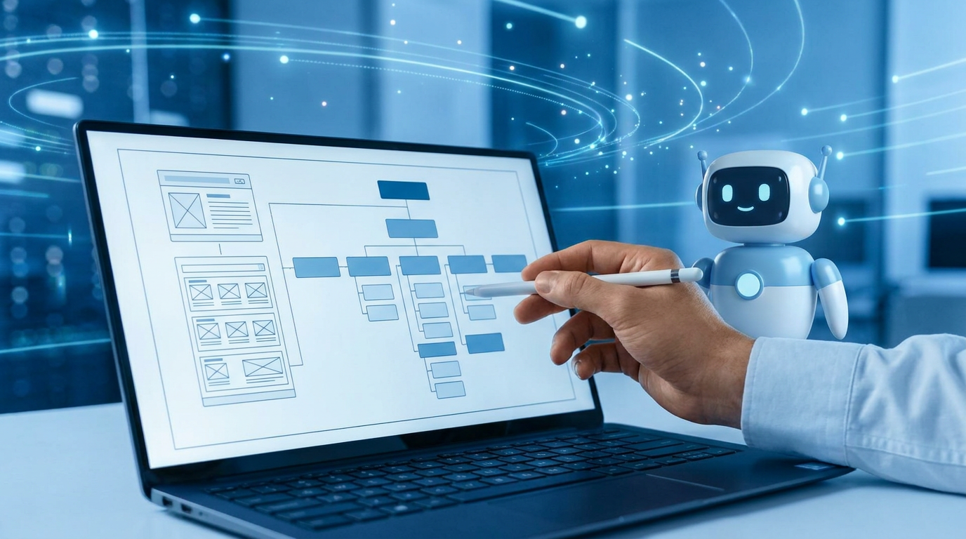
Have you created e-learning materials but are struggling with issues like "learners dropping out midway," "delays in publication due to many revision cycles," or "inability to produce high-quality materials even using AI"?
The quality of educational materials is determined by "human design skills"
Generative AI, including ChatGPT, is now an extremely useful tool that instantly handles tasks such as summarizing text and creating outlines. However, AI cannot autonomously take on the most essential parts of educational design, such as "what challenges learners are currently facing" and "how we want to change behavior in the field through this training." The more AI evolves, the more the "design skills" of the humans using it greatly influence the quality of the materials and, consequently, the learning outcomes.
Explaining Instructional Design (ID) from a Practical Perspective
By systematically studying educational design through the eLP Professional Certification (Content Creator), I personally experienced a major shift from relying on traditional experience-based production to logically designing objectives, pathways, and evaluation criteria. In this article, I will clearly explain, with successful practical examples leveraging this certification, why incorporating Instructional Design (ID) reduces dropout rates in learning materials and dramatically improves production efficiency.
Table of Contents
- How Does Instructional Design (ID) Change Educational Materials?
- 2. Case Study: Redesigning English-Japanese Manuscripts and Improving Them into e-Learning Materials That Promote Autonomous Learning (Prevention of Antitrust Law Violations)
- Reasons Why Production Utilizing ID Leads to Results
- Summary: Production Utilizing ID Changes Both "Quality and Efficiency"
1. How Does Instructional Design (ID) Change Educational Materials?
In the first place, what exactly differs between educational materials created by incorporating the concept of Instructional Design (ID) and those that do not? The main differences can be summarized into the following three points.
1-1. The "Intent" of the Content Becomes Clear
In general educational material production, it is common to simply arrange the "knowledge to be conveyed" in order. However, in production that leverages ID, the "educational objectives" are first set, and from there, the "learning goals that the learners should achieve" are defined by working backward.
All chapters and slides can be logically explained from a design perspective as to "why this order" and "why this expression". Since there are no parts created arbitrarily, a streamlined and refined curriculum is completed without any waste.
1-2. Creating a "Pathway" That Prevents Learners from Getting Lost
Even if the teaching material is packed with high-quality information, if the granularity of the information is inconsistent or if prerequisite knowledge steps are skipped, learners can get lost along the way.
By incorporating the perspective of instructional design (ID), it becomes possible to appropriately control the balance between what learners already know and what they are about to learn. Because the information is thoroughly organized and structured, unnecessary information is eliminated, creating a "beautiful learning path" that allows learners to study naturally and without stress.
1-3. Improved Accuracy in AI Utilization and Stabilized Quality
In modern instructional material development, leveraging AI is a powerful option. However, the essential direction needed to deeply understand learners' challenges and translate them into clear explanatory texts cannot be entirely delegated to AI.
If you request AI to generate text while the design remains vague, readers will see through it. This leads to evaluations such as "thin content seen somewhere before" or "not suited to the actual context," ultimately lowering the quality of the instructional materials.
The key to maximizing AI performance in the field of instructional material development lies in human design skills that leverage insights from instructional design.
【Division of Roles Between Humans and AI】
・Human (Designer): Creates the "framework" consisting of objectives, evaluation criteria, and learning pathways
・Generative AI: Fleshes out consistent "explanatory texts and structural plans" based on that framework
By giving AI instructions in a state where the "objectives, evaluation criteria, and learning pathways" are logically organized, you can optimize the quality of the generated text.
Place reliable instructional design skills by human hands at the core, and correctly integrate AI as a system to enhance its accuracy and speed. This is the approach to developing high-quality educational materials that keep learners engaged and produce definite learning outcomes.
2. Case Study: Redesigning English-Japanese Manuscripts and Improving Them into e-Learning Materials That Promote Autonomous Learning (Prevention of Antitrust Law Violations)
This is a case study of a project where the legal department of a company provided finalized PPT manuscripts in both Japanese and English, along with quizzes (questions, answer choices, and answers only), based on which compliance training materials were developed.
| Before: Materials are complete, but there is no educational design or evaluation criteria |
|
| After: Approach Using Instructional Design (ID) |
|
Results
Rather than simply pouring PPT slides into e-learning materials, this redesign directly applied the series of frameworks learned in the eLP Professional certification—"Goal Setting ⇒ Evaluation Design ⇒ Learning Flow Design"—to practical work. As a result, we received continued requests with the intention of "wanting to work on other projects as well," gaining trust in the quality of the materials and the production system.
3. Reasons Why Production Utilizing Instructional Design Leads to Results
As can be seen from the case examples, simply incorporating instructional design greatly changes the effectiveness of learning materials. This is because instructional design is a design method backed by theory, not relying solely on individual intuition or experience.
3-1. Learning Effectiveness Improves
ID is based on theories from cognitive psychology and behavioral science about how humans gather information, understand it, and consolidate it into memory. Therefore, it can anticipate and eliminate points where learners might feel hurdles in their learning process.
As a result, the instructional materials become ones that learners "do not get bored or confused midway" and "can complete until the end," leading to true outcomes such as behavioral change in the learners.
3-2. Production Efficiency Increases
The highest costs (time and labor) in instructional material production come from "reworking" and "time spent hesitating."
By implementing ID, the criteria for determining "what is correct" become clear throughout the entire production process. Ambiguous decisions like "let's just go with this design" or "let's include this information just in case" disappear, enabling the development of high-quality content via the shortest route.
3-3. Educational DX Advances Across the Entire Organization
There are many organizations where the production of educational content is dependent on individual personnel.
By introducing a common framework called ID into the organization, the production process is standardized. This ensures a consistent level of quality regardless of who creates the content, and accelerates knowledge sharing across the organization and the digital transformation (DX) of educational content in a healthy manner.
4. Summary: Production Utilizing Instructional Design Changes Both "Quality and Efficiency"
ID is not a technique that decorates educational materials with flashy animations or luxurious narration. It is a scientific approach that supports the framework of the materials to empathize with the learner's psychology and reliably guide them to the goal.
Precisely because we live in an era where AI can instantly generate any text or material, the human design capability of "how to design this framework" will determine the value of future educational content. While enhancing quality, it also optimizes production speed, cost, and efficiency. Achieving this balance is the essence of content production that leverages instructional design (ID).
In your organization as well, why not start by reexamining "What is the learning objective of this content?" from the next instructional material you create?
That said, systematically applying theory and designing prompts at an advanced level in daily work requires both time and expertise. If you want to improve materials in a short period or stabilize the production flow, you can also make use of our e-learning production support services. We will propose the optimal framework tailored to your company's situation.
[e-Learning Content Production Service]
[eLP Professional Certification (External)]
About the Author