







2026.04.01
How to Choose a Multilingual LMS | Comparison Points and Totara Explanation for Successful Overseas Offices and Foreign Employee Training
-
Category
Recommended Articles
-
What is Vyond? Introducing the benefits of an animation video production tool that can be used for business.
-
[Animation Teaching Material Production] How to Create e-Learning Materials ②
-
How does Vyond differ from other animation production software? Comparison and recommendations
-
Can Vyond animations be used as teaching materials? Here are the benefits of using them in e-learning and training.
-
Let's create business animations with Vyond! An explanation of the reasons and benefits recommended for business, as well as challenges.
-
Vyond Go (AI Video Generation) Tips and Best Practices ① Vyond Go Setup Guidelines
-
Moodle Basic Course: What is Moodle?
-
[Moodle Basic Course] What can the e-learning management system Moodle do?
-
[Moodle Basic Course] What can be done with Moodle's default features
-
Benefits and Considerations of Moodle Cloud Services
-
Moodle is not only used by universities (widespread use)



"We want our overseas local staff to receive education of the same quality as in Japan"
"We want to create an environment where foreign personnel can also receive sufficient training"
Many companies expanding globally and those employing foreign personnel are currently facing this challenge.
According to government surveys, the number of overseas local bases of Japanese companies, mainly in the Asian region, has been increasing year by year, and the hiring of foreign personnel has also reached a record high. Employee training is no longer limited to domestic employees who speak Japanese. It has become an era where providing a high-quality educational environment in each language for staff who speak diverse languages determines a company's competitiveness.
However, there are various challenges involved in training foreign personnel. How to deliver education to staff across the seas, and how to overcome language barriers.
An effective approach is employee training utilizing an LMS (Learning Management System). By choosing an LMS that supports multiple languages, you can provide the same quality learning experience at any location worldwide on a unified platform.
This article explains the key points for choosing a multilingual LMS and the features of "Totara," which is adopted by global companies.
Table of Contents
1. Why Multilingual LMSs Are Essential for Companies Now
1-1. Accelerating Business Globalization and the Increase of Foreign Employees
1-2. Educational Barriers That LMS Alone Cannot Solve
2. How to Choose a Multilingual LMS | Four Checkpoints to Avoid Failure
2-1. Confirming the "Range" of Supported Languages
2-2. Checking Data Storage Location and Compliance
2-3. Confirming the Support System
2-4. Checklist of Essential Features
3. What Is Totara as a Multilingual LMS? Features of an Enterprise LMS
3-1. What Is Totara? Basic Functions as a Multilingual LMS
3-2. Five Reasons Why Totara Is Chosen by Multilingual Organizations
4. Case Studies of LMS Totara Implementation | Successful Examples of Global Education
4-1. SHIMANO | Centralizing Cross-Country Mechanic Training
4-2. UNICEF | Eliminating Educational Divides with a Learning Platform Connecting 190 Countries Worldwide
5. Summary | Accelerate Global Talent Development with a Multilingual LMS like Totara
1. Why Multilingual LMSs Are Essential for Companies Now
1-1. Accelerating Business Globalization and the Increase of Foreign Employees
In recent years, the global expansion of Japanese companies has been accelerating. According to the Ministry of Economy, Trade and Industry's "Basic Survey on Overseas Business Activities" (*), the number of overseas local subsidiaries of Japanese companies, mainly in manufacturing, in ASEAN countries such as Thailand, Indonesia, and the Philippines is increasing year by year.
Furthermore, the recruitment of foreign talent within Japan is rapidly progressing. According to the "Status of Foreign Employment" (※) announced by the Ministry of Health, Labour and Welfare in January 2025, as of the end of October 2024, the number of foreign workers employed in Japan has exceeded 2.3 million, marking a record high. This represents a sharp increase of approximately 2.5 times compared to 2015, ten years ago.
These changes are forcing a fundamental shift in corporate talent development strategies.
The traditional education model targeting only Japanese employees can no longer support the growth of the entire organization. Providing high-quality learning opportunities to all employees, including local staff at overseas bases and foreign personnel within Japan — this has become the new standard in talent development for the global era.
* Ministry of Economy, Trade and Industry "Basic Survey on Overseas Business Activities"
https://www.meti.go.jp/statistics/tyo/kaigaizi/index.html
* Summary of Notifications on the Employment Status of Foreigners by the Ministry of Health, Labour and Welfare (As of the end of October 2024)
https://www.mhlw.go.jp/stf/newpage_50256.html
1-2. Educational Barriers That Cannot Be Solved by LMS Alone
In recent years, many companies have introduced LMSs and are advancing the digitalization of employee training. Traditional group training involved enormous costs and effort, such as travel time, venue fees, and securing instructors, and there was also the issue of variability in content and quality for each training session. In addition to this background, the demand for online training has rapidly increased triggered by the COVID-19 pandemic, and LMSs have become established as a standard tool for employee training within Japan.
However, there is a major pitfall here.
Many LMSs are optimized for Japanese employees, so the multilingualization of materials and systems has not progressed sufficiently. As a result, deployment to overseas site staff and foreign employees in Japan is delayed, creating a new disparity between those who can receive training and those who cannot.
So, what kind of LMS should be chosen to realize company-wide education including overseas offices and foreign employees? The next chapter explains specific checkpoints that must be kept in mind when selecting a multilingual LMS.
2. How to Choose a Multilingual LMS|4 Checkpoints to Avoid Failure

There are many LMSs that claim to support "multilingual capabilities," but their actual features vary widely. Some only have a multilingual system UI, while others offer multilingual content, such as the ability to switch text information by language. There are even those that can integrate with external services to provide multilingual videos. The scope of these capabilities differs significantly.
Here, we explain the four essential checkpoints to confirm when selecting a multilingual LMS to fully realize global talent development.
2-1. Confirming the "Range" of Supported Languages
The first thing to check is the scope of supported languages. Understand the countries and regions where your company operates, as well as the languages of foreign employees hired both domestically and internationally, and verify whether the LMS supports those languages. There are many cases where a system was adopted because it was labeled multilingual, but upon implementation, the necessary languages were not included. Be sure to check not only the "number" of supported languages but also "which languages" are supported.
Also, it is necessary to carefully discern the meaning of the term "multilingual support." There is a significant difference in practicality between whether only the system's UI (user interface), such as menus and buttons, is multilingual, or whether content like tests and teaching materials can also be switched and displayed by language. While there are relatively many LMSs that support multilingual UI only, LMSs equipped with multilingual management functions at the content level are limited.
Especially regarding the multilingualization of educational content and videos, there are many aspects that cannot be resolved by the LMS functions alone. It is necessary to clearly define the types of content your company owns and the requirements for multilingualization, and consider integration with other systems as well. For example, whether it is sufficient to multilingualize only the subtitles of videos or if you want to support multilingual audio as well—these requirements greatly affect the necessary functions and the services to be integrated.
When selecting, make sure to check the specific specifications regarding how extensively you want to implement multilingual support and how far the system can support multilingual capabilities.
2-2. Confirmation of Data Storage Location and Compliance
An important aspect of global expansion is the location where data is stored.
Each country has its own regulations regarding the handling of personal information, and deciding in which country’s server to store employees’ learning data and personal information is extremely important from a compliance perspective. A representative example is the EU’s GDPR (General Data Protection Regulation), which imposes strict conditions on data transfers outside the region, and China’s Cybersecurity Law, which mandates data localization (domestic storage requirements).
In particular, in China, companies that operate critical information infrastructure or handle personal information above a certain scale and conduct business domestically are generally required to store data on servers within the country.
When selecting an LMS, it is advisable to check whether it is cloud-based or on-premises, where the data centers can be located if cloud-based, and whether it can comply with each country's legal regulations and network environment.
2-3. Confirmation of Support System
It is also important to check what kind of support is available when problems occur. For overseas locations, you need to confirm whether support covers the relevant time zones, which languages are available for operational guidance and inquiries during implementation, and consider your company’s operations accordingly.
In the case of Japanese vendors, overseas support is often provided through partner companies, so it is advisable to investigate the track record and reputation of these partner companies in advance.
2-4. Checklist of Essential Functions
In addition to multilingual support, it is also necessary to thoroughly check the basic functions assuming global deployment.
〇 Organization Management and Permission Settings
In global companies, it is common to have complex organizational hierarchies such as regions, countries, offices, and departments. Therefore, it is important to confirm whether the LMS can flexibly accommodate such multi-layered structures and whether appropriate permission settings can be configured for each hierarchy level.
〇 Reporting Functions and Data Visualization
To grasp the overall corporate training status, it is essential to be able to create consolidated reports covering the entire global scope, and also to confirm whether detailed reports by country or by location can be flexibly generated. Additionally, it is important to identify what kind of reporting is necessary from the perspective of talent development strategy and select an LMS that can meet those requirements.
〇 Possibility of Future System Integration and Customization
There is a possibility that functions not anticipated at the time of implementation may become necessary later. Therefore, it is important to confirm in advance whether integration with HR systems and business systems is possible, and whether flexible expansion such as adding custom features can be accommodated to support the company's growth.
3. What is Totara as a Multilingual LMS? Features of Corporate LMS
To establish a company-wide training system that includes foreign employees both domestically and internationally, there are more factors to consider than when selecting a traditional LMS based on Japanese employees. So, what kind of systems are available specifically? Here, we introduce "Totara," which is widely adopted by global companies. Totara is a platform that has been selected for 12 consecutive years as one of the "Top 20 LMS Companies" by Training Industry, a globally authoritative organization evaluating corporate learning solutions.
3-1. What is Totara? Basic Functions as a Multilingual LMS
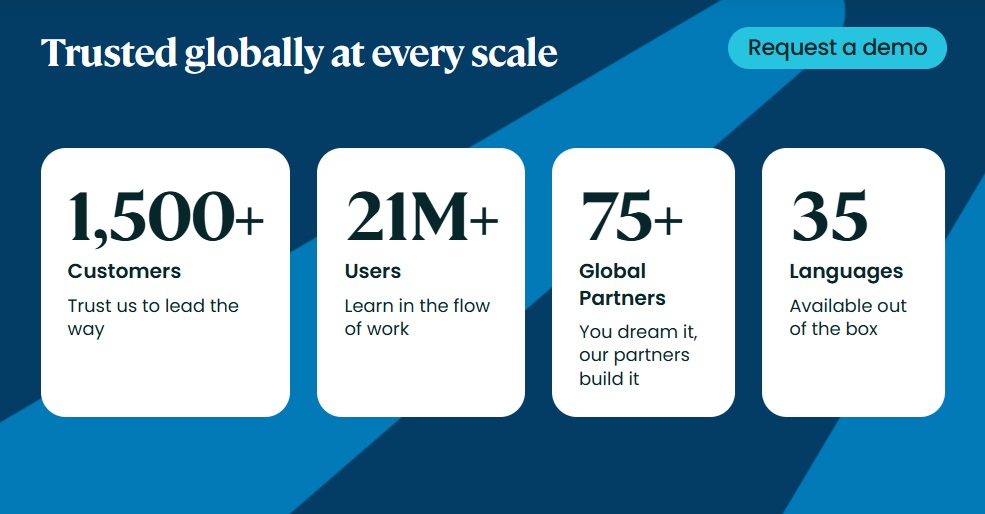
Totara is a platform optimized for corporate use, based on the open-source LMS "Moodle," which is used by educational institutions worldwide. While Moodle specializes in features for educational institutions such as universities and schools, Totara enhances functions necessary for corporate talent development, including organization management, performance management, and employee engagement improvement.
Developed in New Zealand, Totara is currently adopted by major companies, government agencies, NGOs, and others worldwide. It has a wealth of implementation experience in multinational companies, such as global manufacturers with manufacturing bases in multiple countries, as well as retail and financial companies with stores and branches around the world.
3-2. Five Reasons Why Totara is Chosen by Multilingual Organizations
There are the following reasons why Totara has overwhelming support in multilingual education for global companies.
2: Language switching of content via multilingual filters
3: Diverse integrations with external systems, such as multilingual subtitles for videos
4: Realization of country- and region-specific branding through tenant functionality
5: Flexible hosting
Let's take a closer look.
① Support for a Wide Range of Languages
Totara supports a wide variety of languages, and administrators can build a multilingual system UI simply by installing language packs. There are currently 38 language packs available, including English, as well as major Asian languages such as Japanese, Chinese, Thai, and Indonesian, and key European and South American languages like Spanish, Portuguese, French, German, and Italian. Additionally, diverse languages such as Dutch, Russian, Turkish, and Arabic can also be used just by installing the respective packs.
Languages can be set individually for each user, and they are automatically set to the language used in the browser, providing excellent multilingual support features.
②Language Switching of Content Using Multilingual Filters
Many systems support multilingual system UIs, but the reality is that multilingual support for content is still lacking. Content refers to items registered by administrators themselves in the system, such as course titles and test questions.
If the LMS does not support multilingual content, it relies on browser auto-translation or similar methods, but because these are automatic translation functions, there is a risk that technical terms may be replaced with words of different meanings or that the translation may deviate from the creator's intent.
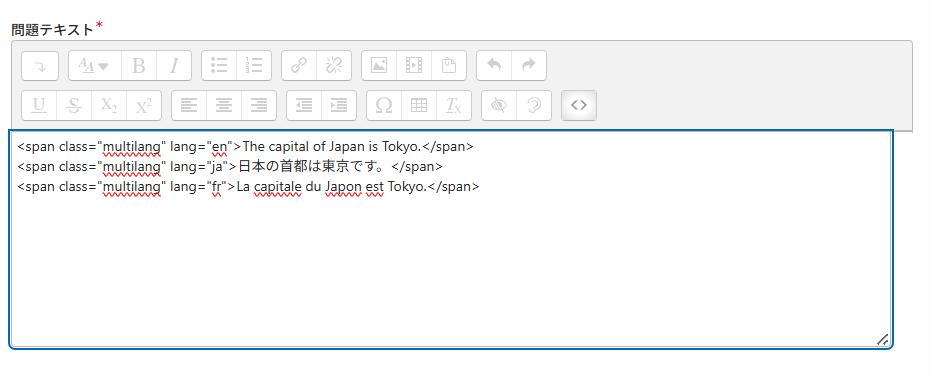
Totara is equipped with a multilingual filter feature that automatically replaces content with the set language.
For example, if you want to display content in English, Japanese, and French, by entering text using a dedicated notation method, the corresponding language will be displayed according to the set language. Since the translation reflects the creator's intent, this is a very useful feature for important educational content.
▽The text in the corresponding language is displayed according to the language set by the user
③Various integrations with external systems such as multilingual subtitles for videos
Because Totara is open source, various extensions tailored to the characteristics of companies are possible.Video streaming services are not limited, and by integrating with services that support multilingual subtitles, a single video can be presented with subtitles in multiple languages.
④Achieving country- and region-specific branding with the tenant feature
Totara's tenant feature is a very powerful function for companies with many employees and those operating globally.
A tenant is a mechanism that allows the creation of independent groups with different content and users within a single system. With tenants, you can build independent learning environments for each country or region within a single Totara platform. Each tenant has its own branding, curriculum, and user management, while headquarters can centrally manage the entire system.
⑤ Flexible Hosting
Unlike SaaS-based LMS, Totara’s major feature is the freedom to choose the server location. You can select the optimal environment according to your company’s security policies and national regulations, such as complete in-house management in an on-premises environment, public cloud, or private cloud.
For example, companies handling highly confidential information can operate entirely within their own internal networks, and they can also utilize cloud infrastructure they already possess. Additionally, in countries with data localization requirements, it is possible to select and deploy cloud servers within that country.
Totara, which can flexibly build server environments according to corporate and national rules without relying on specific vendors' cloud services, is a highly useful option for companies considering global expansion across multiple countries in terms of both compliance and security.
4. LMS Totara Implementation Cases | Successful Examples of Global Education
From here, we will introduce examples of organizations utilizing Totara on a global scale.
4-1. SHIMANO | Centralizing Cross-Country Mechanic Training with Totara
Shimano, a leading Japanese bicycle component manufacturer, utilizes Totara for staff training. To maintain the reputation of high-quality parts, it is essential that mechanics working at independent bicycle retailers across various European countries correctly understand Shimano products. However, these mechanics are not Shimano employees but belong to independent retailers dispersed throughout Europe, and the languages they use vary by country. Previously, paper manuals were sent out, but the information quickly became outdated, and managing distribution and multilingual support placed a significant burden on the company.
Shimano built a learning hub on Totara that offers over 160 programs and more than 250 courses in 13 languages. Because management authority can be delegated at the country level, it has become possible to reduce the burden on headquarters while enabling flexible educational deployment tailored to each country's language.
Technicians can take recommended programs according to their roles and earn certification through open badges. Additionally, Totara's notification feature enables login reminders and course suggestions based on preferences in each country's language. Currently, this has expanded to over 25,000 users and boasts approximately 170,000 course completions, making it a successful case.
>Link (English):
https://www.totara.com/customer-stories/shimano/
4-2. UNICEF|Eliminating Educational Divides with a Learning Platform Connecting 190 Countries Worldwide
UNICEF is an international organization active in more than 190 countries and regions. In addition to over 23,000 staff members, it operates a Totara-based learning platform (Agora) serving more than one million partners and general learners.
UNICEF offers courses in 26 languages for learners from diverse countries. In addition to actively engaging beyond organizational boundaries, the tenant feature allows multiple UN agencies to have their own dedicated learning environments on a single platform while providing their unique courses.
In addition, by integrating with industry-leading solutions such as LinkedIn Learning and Gamoteca, as well as with PageUp, SAP, and Azure, account creation during onboarding and account deactivation during offboarding are automated, enabling efficient global-scale talent development.
> Link (English):
https://www.totara.com/customer-stories/unicefs-agora-platform-a-decade-of-empowering-minds-changing-lives/
5. Summary|Accelerate Global Talent Development with a Multilingual LMS Using Totara

As globalization advances, companies face challenges such as "providing the same quality of education in every country" and "ensuring foreign employees fully understand the training."
Totara is equipped with multilingual features supporting over 38 languages, automatic content switching according to language, and tenant functionality that enables independent operation by region, providing robust support for the training needs of multinational companies. Because of these features, it is a highly effective LMS for addressing needs such as "centralized management in multiple languages," "standardization of training quality across locations," and "reliable safety training for foreign employees."
Companies that want to further accelerate their global talent development should definitely consider utilizing Totara.
Human Science, the only Totara partner in Japan, will provide full support from implementation to operation.
About the Author

Supervisor Information