







2025.12.18
Solving Educational Challenges in Manufacturing with LMS | What is the System that Supports Efficient Training and Employee Retention?

-
Category
Recommended Articles
-
What is Vyond? Introducing the benefits of an animation video production tool that can be used for business.
-
[Animation Teaching Material Production] How to Create e-Learning Materials ②
-
How does Vyond differ from other animation production software? Comparison and recommendations
-
Can Vyond animations be used as teaching materials? Here are the benefits of using them in e-learning and training.
-
Let's create business animations with Vyond! An explanation of the reasons and benefits recommended for business, as well as challenges.
-
Vyond Go (AI Video Generation) Tips and Best Practices ① Vyond Go Setup Guidelines
-
Moodle Basic Course: What is Moodle?
-
[Moodle Basic Course] What can the e-learning management system Moodle do?
-
[Moodle Basic Course] What can be done with Moodle's default features
-
Benefits and Considerations of Moodle Cloud Services
-
Moodle is not only used by universities (widespread use)



Among those responsible for training in the manufacturing industry, many may be facing concerns such as "a shortage of personnel to conduct training" and "lack of time to devote to development."
Education is indispensable for stable on-site operations in manufacturing, including safety measures, quality control, and technology transfer. However, it is unrealistic for training staff alone to cover all training within limited personnel and time, and especially in small and medium-sized enterprises, there are many cases where the educational system has not kept pace.
One approach to overcoming this situation is the "DX transformation of employee education" utilizing an LMS (Learning Management System). By digitally organizing the educational framework, it is possible to greatly improve not only efficiency but also the quality and continuity of education.
This article clearly explains the educational challenges in the manufacturing industry, the benefits of introducing an LMS, key points for selection, and practical case studies, presenting ways to support the efficiency of education and employee retention.
Table of Contents
- 1. What Are the Educational Challenges Faced by the Manufacturing Industry?
- 2. Four Benefits of Introducing an LMS to the Manufacturing Industry
- 3. How to Choose an LMS Suitable for the Manufacturing Industry
- 4. Totara | An LMS Optimized for the Manufacturing Industry 4-1. What is Totara?
- 5. Examples of Totara Utilization in Manufacturing 5-1. Kia Motors Sweden|Automating Training Across Multiple Locations and Job Types
- 6. Summary|Solving Educational Challenges in Manufacturing with Totara
4-2. Why Totara is Ideal for the Manufacturing Industry
5-2. BOSS Paint|Job-Specific Skill Management and Improved Retention Rates
1. What Are the Educational Challenges Faced by the Manufacturing Industry?
In manufacturing sites, employee education plays a crucial role in safety measures, quality control, and the transfer of technical skills. Continuous training is indispensable to prevent workplace accidents and ensure a stable supply of products.
However, in reality, there are many voices saying, "Although the importance of education is understood, it is not sufficiently implemented on-site." The "2025 Edition Manufacturing White Paper" published by the government clearly highlights the challenges of human resource development in the manufacturing industry.
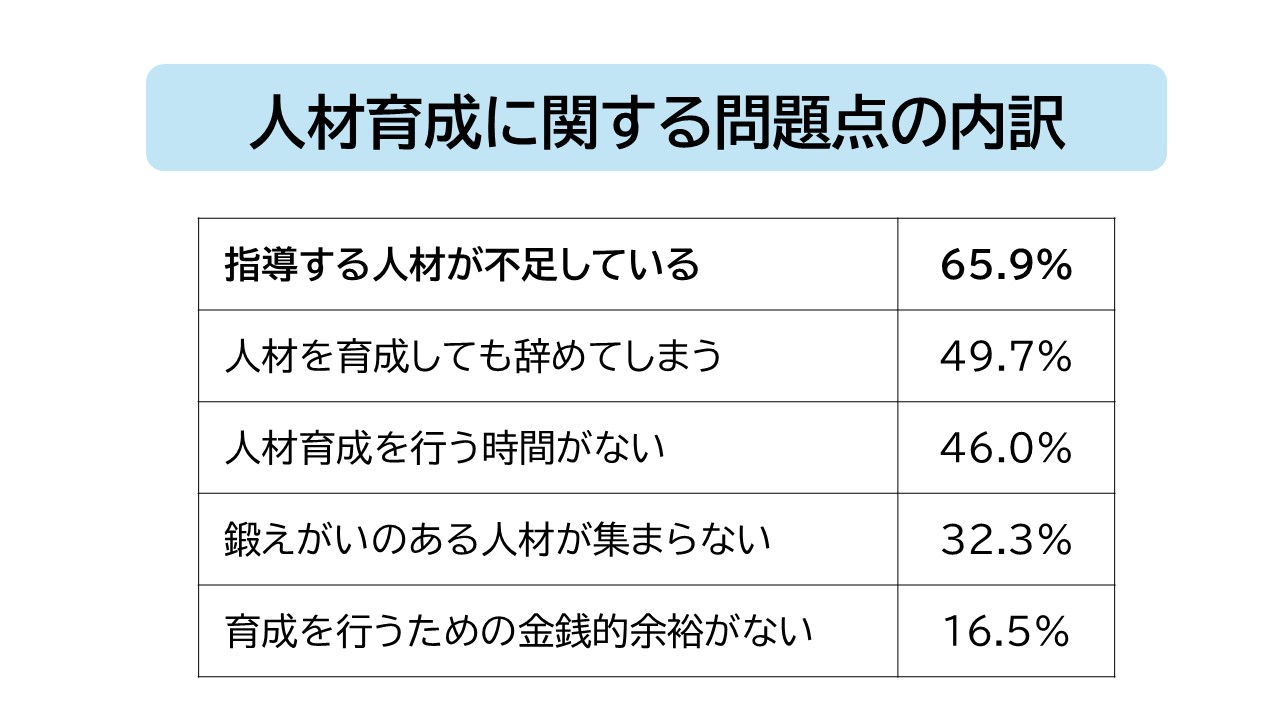
* The above table was created based on the 2025 Manufacturing White Paper.
■ Issue 1: Chronic shortage of educational resources
According to the same white paper, about 60% of companies responded that they lack personnel to provide instruction. Additionally, many voices indicate "no time for training" and "no financial leeway," revealing a general shortage of resources necessary for education.
In practice, production activities take top priority on site, making it difficult to secure time and personnel for training. Especially in small and medium-sized enterprises, there are often no dedicated education staff, and site managers frequently take on training duties concurrently. Furthermore, much education relies on paper materials and oral transmission, leading to issues of personalization and inefficient operation.
■Issue 2: Difficulty in Passing Down Skills and Knowledge
The same white paper also points out the ongoing decrease in younger workers and increase in older workers in the manufacturing industry. This shift has made it difficult to pass down the skills and knowledge accumulated on-site to the next generation.
In companies without a well-established training system after experienced employees retire, there tends to be variability in work quality, and training takes more time. As a result, there is a risk not only of decreased productivity and weakened on-site capabilities but also of impaired ability to respond to technological innovation.
■Issue 3: Addressing Foreign Workers
The manufacturing industry employs a large number of foreign workers. Against the backdrop of labor shortages caused by a declining birthrate and aging population, the increasing employment of foreign personnel has brought communication challenges due to language and cultural differences. There are concerns such as "I thought I taught it, but it wasn’t understood" and "Instructions are misunderstood, leading to mistakes," and because education is often personalized, there are inconsistencies in training quality and retention rates.
Furthermore, many training materials are created only in Japanese, making it difficult for foreign staff to understand. This lack of a well-established educational environment poses risks that can affect both safety and productivity.
2. Four Benefits of Introducing an LMS to the Manufacturing Industry
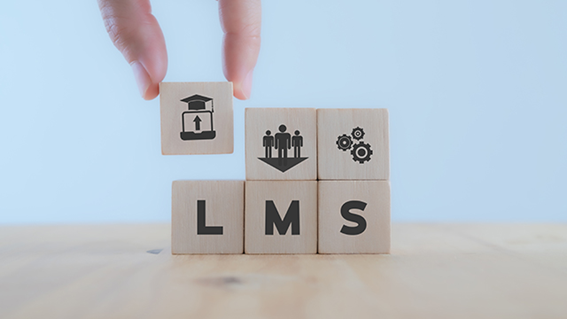
The use of LMS (Learning Management System) is attracting attention as a means to solve these issues. An LMS is a system that centrally manages all tasks related to education, from distributing training content to managing attendance records.
Here, we will introduce four specific benefits that the manufacturing industry can gain by implementing an LMS.
>What kind of LMS is Totara Learn? Introduction to Features and Use Cases
・Merit 1: Standardization and Efficiency of Training
In manufacturing sites, a variety of personnel work, including full-time employees, temporary staff, and foreign workers. Furthermore, in companies handling a wide range of products and processes, the knowledge and skills required vary by job type.
In such circumstances, it is often difficult for training managers to conduct training tailored to each individual at the appropriate timing due to limited time and resources. Additionally, due to the busyness of the workplace, gathering employees all at once is challenging, making it hard to advance the standardization of training.
By introducing an LMS, training can be systematized and an environment established where courses can be taken online "anytime, anywhere." Automatically assigning courses according to department and position reduces the burden on training managers while ensuring that all necessary training is provided without omission.
・Merit 2: Strategic Development through Visualization of Learning Data
By recording teaching materials and course attendance history in the system, it is possible to accurately grasp who took which training and when. This is not just a management function but an important mechanism to ensure the quality of education.
Keeping records allows them to be used for audit responses and compliance documentation, contributing to corporate risk management. Additionally, by analyzing individual skill acquisition status based on learning history and linking it to evaluation systems and career development, education is not left unfinished but connected to continuous improvement and strategic human resource development.
・Merit 3: Enhancing On-site Capabilities through Multilingual Support
With the increase in foreign staff, language barriers have become a growing obstacle to training. An LMS equipped with multilingual support functions can provide training content in employees’ native languages, leading to improved comprehension and error prevention. As a result, this contributes to enhanced safety, stabilized work quality, and the overall strengthening of on-site capabilities.
・Merit 4: Increased Motivation and Reduced Turnover
By presenting career paths based on learning history and skill acquisition status through the LMS, employee motivation for growth can be enhanced. Linking this with internal certification systems and skill maps ensures that education is directly connected to individual career development, which also helps prevent turnover. For young talent in particular, "visualizing growth" is the key to retention.
3. How to Choose an LMS Suitable for the Manufacturing Industry
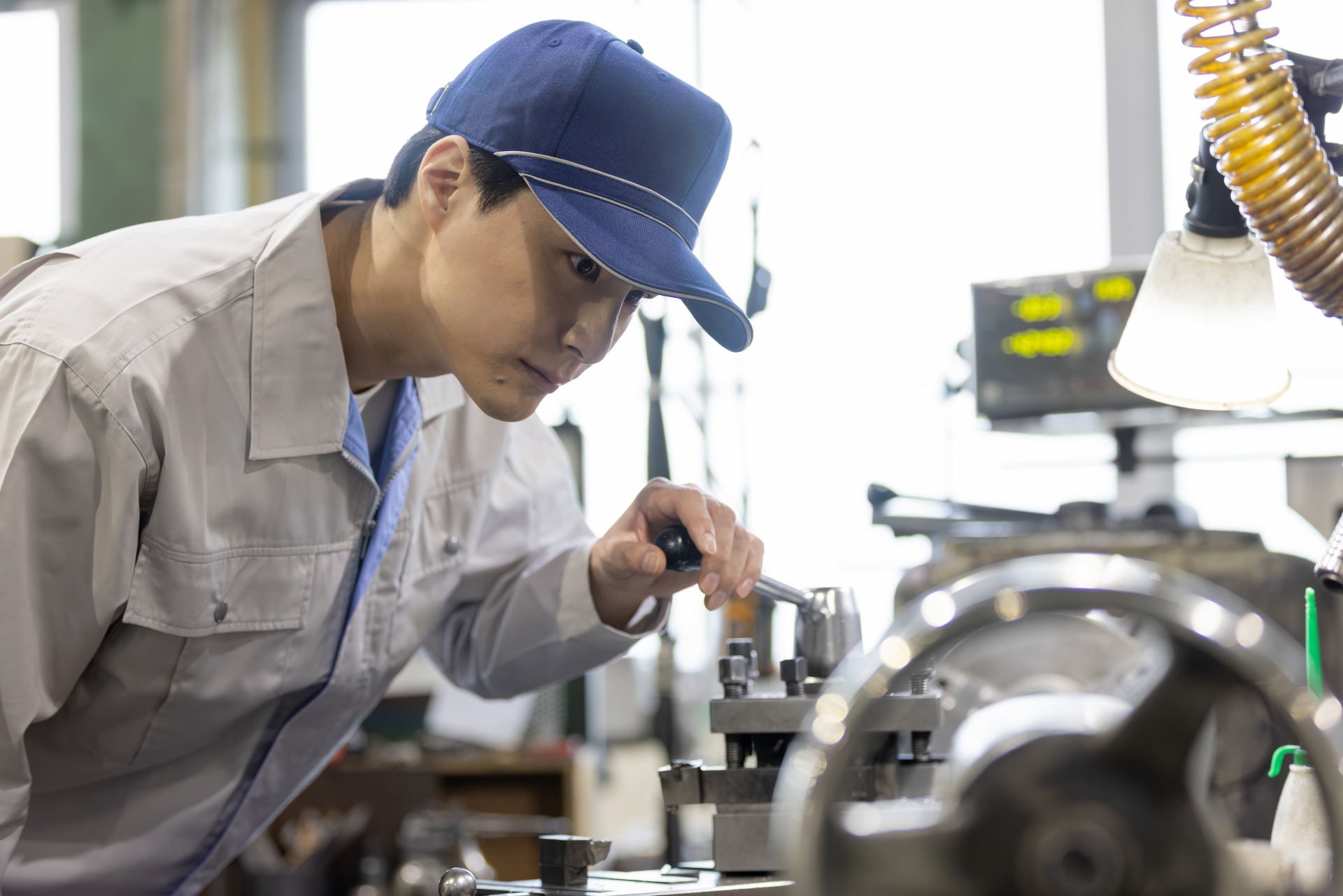
There are various LMS products available, each with different features. When selecting an LMS for the manufacturing industry, functions that take into account the characteristics of the workplace and the composition of personnel are required. Below, we organize the particularly important points.
・Point 1: Automation of Education
In manufacturing workplaces, there is often no time to spare for arranging training or managing progress, making automation of education indispensable. An LMS with a function that automatically assigns courses according to departments and positions can reduce the burden on education managers while ensuring that necessary training is provided without omission.
・Point 2: Visualization of Results Function
Systems that visualize learning outcomes, such as internal certification programs and badge functions, are effective in boosting employee motivation. This is especially important for young employees, who tend to leave if they cannot see a sense of growth or future prospects, making it crucial to clearly demonstrate the results of education.
・Point 3: Support for Hybrid Learning
Not all training can be completed online. Especially for practical technical skills, some parts can only be learned face-to-face. An LMS that can centrally manage both online and in-person learning histories enables flexible training operations.
・Point 4: Multilingual Support
In the manufacturing industry, where the proportion of foreign workers is high, language barriers can become obstacles to training. An LMS that can provide interfaces and content in multiple languages allows training materials to be accurately conveyed to multinational staff, leading to improvements in safety and quality.
4. Totara | An LMS Optimized for the Manufacturing Industry
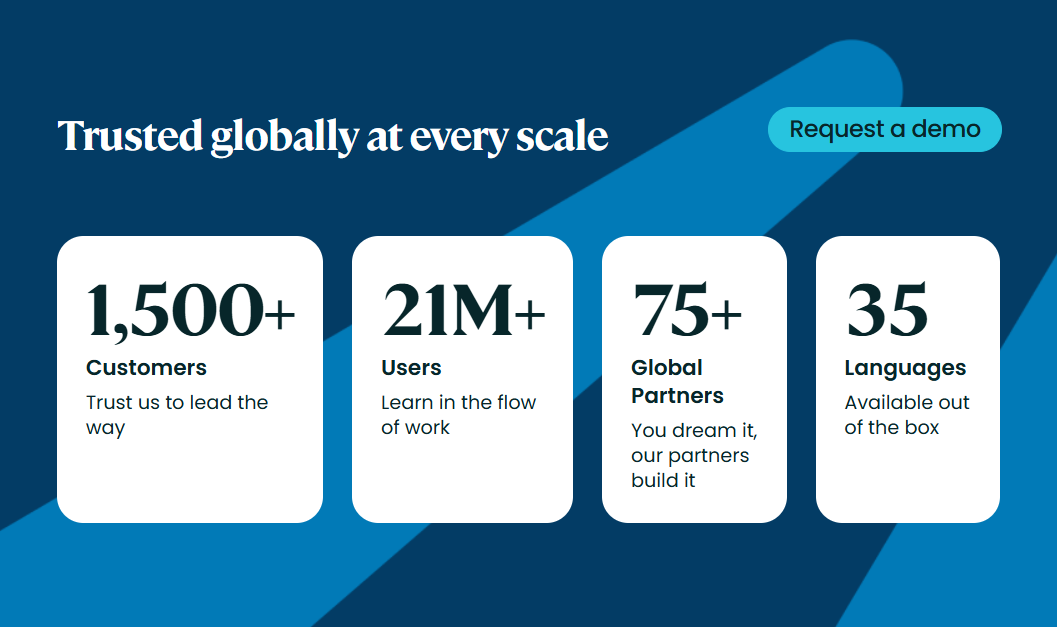
In industries like manufacturing, where job types and locations are diverse, centralized management and automation of training are required. In such a context, implementing an LMS offers significant advantages. Among them, Totara is an LMS highly suited for manufacturing, designed to meet on-site needs with features such as the "Dynamic Audience" function that automatically assigns courses based on department and position, multilingual support, and mobile compatibility.
4-1. What is Totara?
Totara is a learning management system (LMS) optimized for enterprises. It is developed based on "Moodle," an open-source LMS widely used by educational institutions worldwide, inheriting its flexibility and scalability while adding features specialized for corporate talent development and training management.
It comes standard with practical functions such as learner management according to organizational structure, compliance training deadline management, and operation of internal certification systems. Currently, it has been introduced by over 1,500 companies worldwide and is used by more than 2.1 million users (as of October 2025).
4-2. Reasons why Totara is ideal for the manufacturing industry
Totara is an LMS that provides practical and flexible features to address the educational challenges faced by the manufacturing industry. It is especially compatible with manufacturing in the following ways.
■Automatic Course Assignment with Dynamic Audiences
In manufacturing, the required training content varies by job type and department. By using Totara's "Dynamic Audience" feature, employees can be automatically grouped based on attributes such as department, position, and skill level, and appropriate courses can be automatically assigned. This prevents training omissions and reduces workload, enabling efficient training management.
■ Visualization of achievements through certification badges
Totara allows the issuance of "certification badges" and "completion certificates" based on learning outcomes. This enables visualization of employees' skill acquisition status, which helps boost motivation and supports career development. Especially for young employees, being able to see their growth and future prospects is key to preventing turnover.
■Support for blended learning combining face-to-face and online
Totara can centrally manage the records of both online learning and face-to-face training. It enables flexible training design by combining content that can only be learned in person, such as practical technical skills, with content that can be efficiently learned through e-learning.
■Multilingual Support to Accommodate Foreign Personnel
In the manufacturing industry, where the proportion of foreign workers is high, multilingual support is indispensable. Totara comes standard with a multilingual interface and allows language settings for each user. By adding automatic subtitles to video materials and utilizing translation functions, education that transcends language barriers can be realized.
■Centralized Management of Multiple Organizations with Tenant Functionality
Totara includes a "Tenant Function" that allows independent management of multiple organizations or sites within a single LMS environment. For example, even if each factory has different training managers, unique course and user management can be conducted within each tenant, making it highly effective for manufacturing companies with group enterprises or multiple locations.
>Human Science | Totara Learn Solutions
5. Examples of Totara Utilization in Manufacturing
Here, we introduce examples from the manufacturing industry that have succeeded in improving training efficiency and employee retention by implementing Totara.
5-1. Kia Motors Sweden|Streamlining Education Across Multiple Locations and Job Types
The automobile manufacturer Kia Motors Sweden operates approximately 90 dealers and 110 service centers nationwide, providing training for diverse roles including sales, technical, and management positions.
With the previous LMS, learners, managers, and administrators each found it difficult to use, with particular challenges in progress management and training operations.
The introduction of Totara significantly improved the user experience. Technicians can check their training progress according to their roles, and managers can monitor their team’s learning status in real time. Furthermore, blended learning operations were realized through custom plugins, enabling flexible training that combines face-to-face sessions and e-learning.
>Link (English):
https://www.totara.com/customer-stories/kia-motors-sweden/
5-2. BOSS Paints|Utilizing LMS to Support Job-Specific Skill Management and Improve Retention Rates
Belgian paint manufacturer BOSS Paints has maintained its competitiveness by providing customers with advanced technical advice. However, as their product lines and services diversified, the need to systematically conduct technical training for employees increased.
The company organized the necessary skills for about 55 job types and built a "Competency Framework" linking training courses in Totara. They offered approximately 200 courses for sales and support staff, implementing blended learning that combines e-learning, face-to-face training, and workshops.
Furthermore, at franchise stores with high turnover rates, they strengthened onboarding training, achieving early development and improved retention rates. Four years after implementation, course completion rates improved from 38% to over 80%. Through job-specific skill management and flexible learning design, they have achieved significant results in maintaining technical skills and employee retention.
>Link (English): BOSS Paints achieves target of 80% course completion in four years for its technical product training - Totara Learning
6. Summary|Solving Educational Challenges in Manufacturing with Totara

In the manufacturing industry, the importance of education is increasingly emphasized in areas such as safety measures, quality control, and technology transfer. However, many challenges exist on-site, including a lack of resources allocated to education, workforce diversification, and training systems that depend heavily on individual expertise.
Implementing an LMS is an effective way to address these challenges. By selecting an LMS equipped with features required by the manufacturing sector—such as automation of education, multilingual support, visualization of outcomes, and support for hybrid learning—it contributes to strengthening on-site capabilities.
In particular, Totara includes these requirements as standard features and has actually improved the quality and efficiency of education in manufacturing-related companies, achieving results in employee retention and skill management.
If you are responsible for improving training efficiency or building an educational system, please feel free to consult Human Science, the only Totara partner in Japan. We will propose the optimal solution tailored to your company's challenges.
Related Services
>Human Science | Totara Learn Solutions
About the Author